2025 World championsips
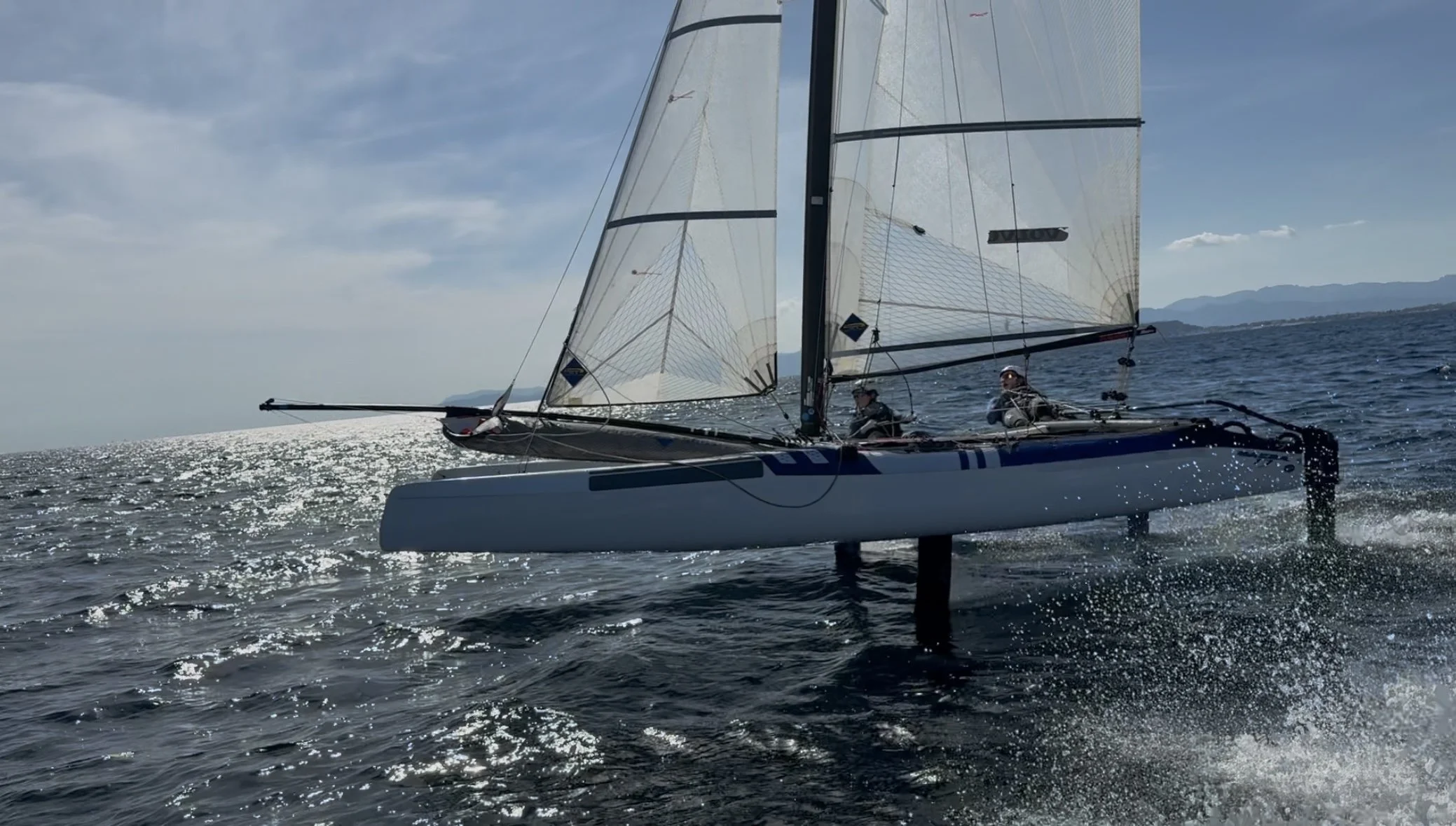
Training
Between the Europeans and the Worlds we were put in contact with Tara — an incredibly experienced sailor who has competed at the last four Olympics — and she has kindly decided to coach us on our journey.
We managed to fit in two training camp blocks, one in the UK and the other pre-event in Italy. These camps really opened our eyes to how we could extract more consistent speed from the boat. Although two weeks of coaching won’t take us straight to the top of the fleet, we could feel the improvements every day. Having someone with so much knowledge to answer all our questions made our learning accelerate massively.
Greece had given us some confidence by the end of that regatta — but with one caveat: it was flat water. Anyone who has sailed a Nacra 17 knows that being fast and balanced on the foils in flat water is one thing, but doing the same in waves is something else entirely.
So, our focus became waves, waves, and more waves. The attention to heel and pitch has to go up to eleven — if I let the boat flatten at the wrong moment, or if Chloe doesn’t match the kite to both the wave profile and the feedback I’m giving her about how I want the bow to feel, we crash. And at 20 + knots of boat speed, that’s definitely not gentle.
One of the best experiences during training was having Tara jump in the boat with us — both as helm for Chloe and as crew for me — explaining in real time what the boat needed. That hands-on approach made such a difference and gave us a much clearer picture of how to keep the boat powered and balanced through the waves.
Crunch time
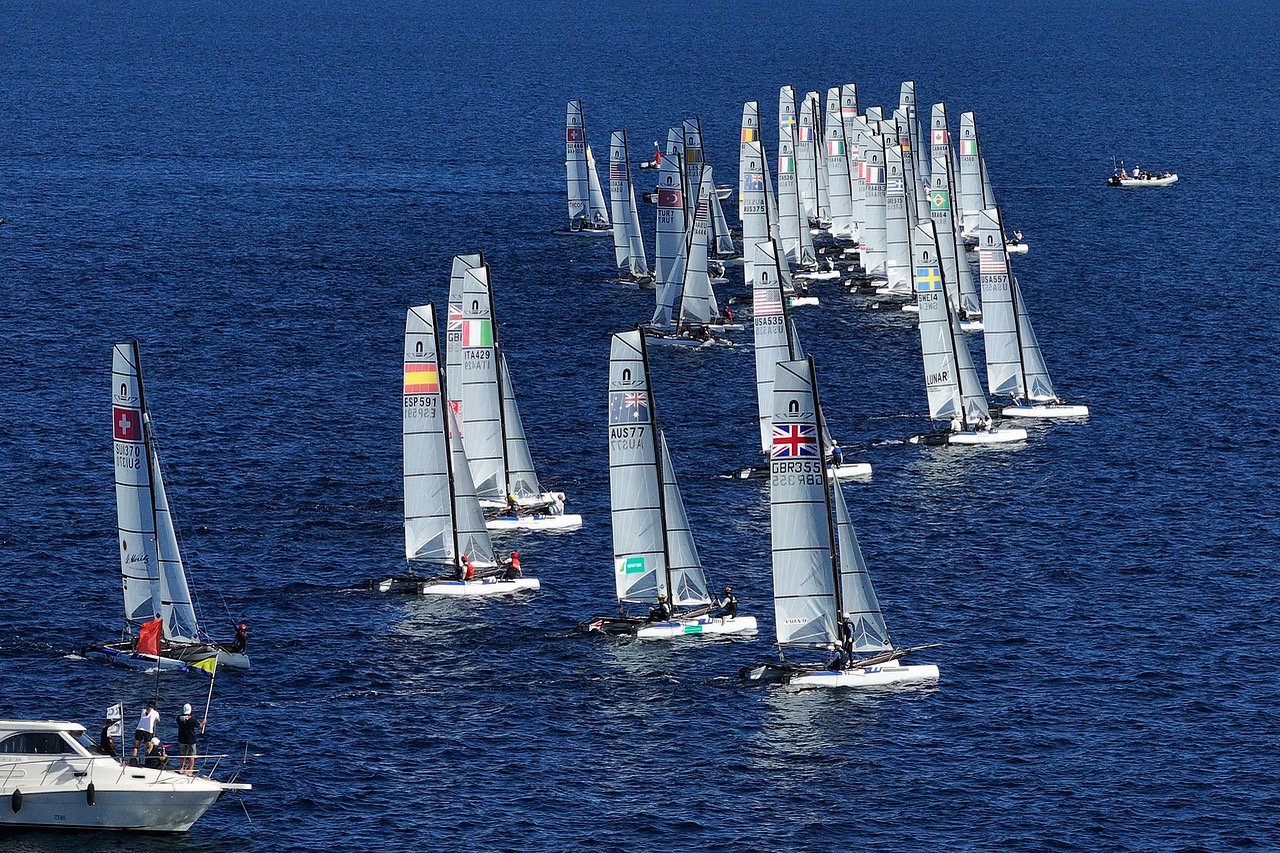
This was definitely the most confident we’ve felt heading into an event so far. Like all competitions, it had its ups and downs, but this one definitely had more ups than before. We found our strength in the fleet — our starts — which consistently put us in the top 20 after the first lap, and even leading the fleet into the first tack in one race. This was definitely a core memory moment for the two of us!
Unfortunately, our boat speed still wasn’t quite fast enough, even with our recent improvements. As a result, we often found ourselves fighting to hold our position rather than moving forward. After just two days of qualifying, we ended up in the middle of the silver fleet.
Even though we were hoping to be a bit higher in the pecking order, we still made solid progress from the start of the season — and that’s what matters most!
As the week went on, the wind and waves built each day. By the final day, we had over 20 knots onshore with steep, close chop. If you want a taste of what sailing a Nacra is like in those conditions, I highly recommend watching the final medal race — it’s only 10 minutes long, and it’s incredible to see what the world’s best can do! (Click here to watch it!)
For us, the week followed a familiar rhythm — some great starts, a few tough moments, and lots of learning as the breeze built each day. Once the wind and waves really kicked in, we could feel the difference that our training sessions with Tara had made.
One of the things I love most about this class is how collaborative it is — many sailors from other nations are always willing to share advice on technique and setup. For anyone reading this who’s thinking about foiling, I’d absolutely recommend giving the Nacra 17 a try if you ever get the chance. We’re certainly glad to be part of this class!
Winter training
The end of the Worlds also marks the end of our racing season for 2025. Now it’s time to put our heads down and train hard before Palma next spring. Thankfully, we don’t have far to go — we’re going to be staying in Cagliari for the winter.
Even though some teams are taking a well-deserved break after a long season, plenty of Nacras are still rigged and ready here with us, so it looks like we’ll have a great training group and an exciting winter ahead!
